Buying jewelry online can be tricky. You see a photo of a shining chain, but how do you know if it’s solidSterling Silver or just cheap metal plated in silver?
However, with the market flooded with “silver-plated” brass and stainless steel sold as the real deal, knowing how to identify authentic precious metals is a necessary skill. At Neesca, we believe in total transparency. Therefore, we have compiled this guide on how to test your jewelry at home. Here are 5 simple tests to ensure you are getting the quality you paid for.
1. First, check the Hallmark
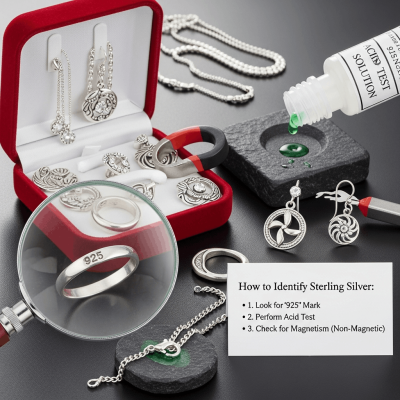
The easiest way to identify real silver is to look for the “hallmark.” Generally, international standards require fine silver to be stamped with a grade.
Specifically, a tiny stamp that says “925”, “Ster”, “Sterling”, or “S925”.
In other words, the “925” indicates that the piece is 92.5% pure silver.
Conversely, If your ring or chain is completely smooth with no markings, proceed with caution—it is likely plated.
2. Next, Try the Magnet Test
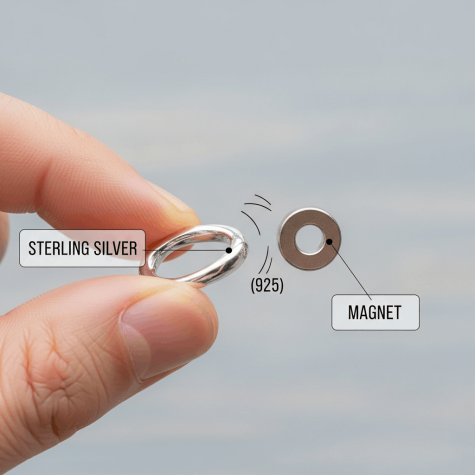
In addition to checking stamps, you can perform a physical test. This is a classic method since silver is a non-magnetic metal.
For instance, take a strong magnet (like one from a fridge or a purse clasp) and hold it near your jewelry.
Consequently, if the jewelry snaps onto the magnet or sticks firmly, it is not real silver. It is likely steel or iron.
On the other hand, real sterling silver might have a very faint reaction due to the copper alloy, but it should never stick instantly.
3. Furthermore, Use the “White Cloth” Rub Test
Surprisingly, real silver oxidizes when exposed to air. In fact, this is actually a sign of authenticity, not a defect!
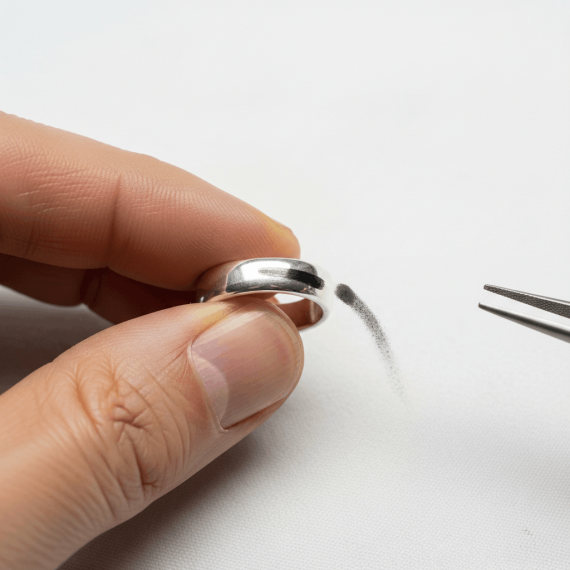
To demonstrate, take a soft, white cloth and gently rub a hidden part of the jewelry.
If you see small black marks on the cloth, that is actually good news. Real silver produces tarnish (silver sulfide) over time.
However, if the cloth comes away perfectly clean or the jewelry starts to flake and reveal a copper color underneath, it is almost certainly fake.
4. Additionally, The Ice Test
Silver has the highest thermal conductivity of any common metal. As a result, it transfers heat (and cold) incredibly fast.
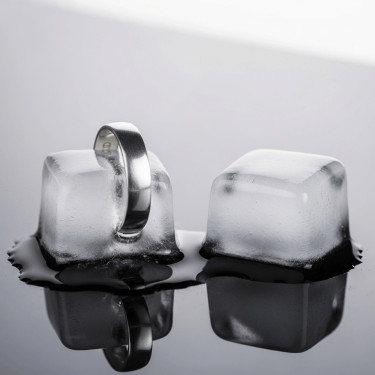
Simply place an ice cube directly onto your silver coin or pendant.
Immediately, the ice should begin to melt, almost as if you placed it on a hot pan.
In contrast, if the ice melts slowly at a normal room temperature speed, the metal is not silver.
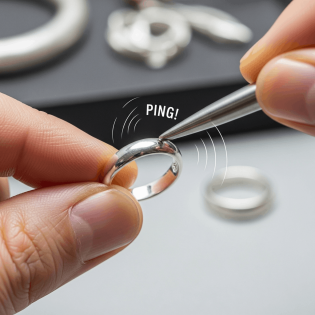
5. Finally, The Sound Test
This works best for rings or coins. Basically, you want to listen to the metal’s “voice.”
Gently tap the silver piece with another metal object or drop it on a hard surface from a low height.
Subsequently, real silver produces a high-pitched, long-lasting ring (like a bell).
Alternatively, base metals like pewter or steel will produce a dull, short “thud.”
Conclusion
Ultimately, wearing fake jewelry isn’t just about losing money. Moreover, base metals often contain nickel or lead, which can cause skin rashes. Therefore, we work hard to ensure you get the quality you paid for.
Don’t gamble with your accessories. Instead, choose pieces that are hallmarked for authenticity and designed to last a lifetime.



Leave a Reply